Logicism
The 19th century is the century of modern logic. As it unfolded its expressive capabilities, many began to sense the similarities it shared with mathematics. What if the two were one and the same, and it were possible to express every mathematical theorem as a logical judgment? This thesis would come to be known as logicism, and the German mathematician Gottlob Frege was the first to articulate it in a consistent manner.
The Debate over Foundations
So far in this series, we have explored Cantorian Set Theory and briefly mentioned the debate over the foundations of Mathematics that took place in the late nineteenth and early twentieth centuries. For the remainder of the series, this debate will provide the backdrop against which the other topics we cover will unfold, including the origins of logicism, which we will examine in this very article. We will encounter different approaches proposed in response to a series of questions: Where does mathematics come from? How can we establish the pristine and exact truth displayed by mathematical theorems?
Questions of this kind concerning the nature of mathematical truth have occupied philosophers for thousands of years. It is therefore necessary to explain why this debate emerged within this narrow and well-defined period of modern history, and what role logicism played in it.
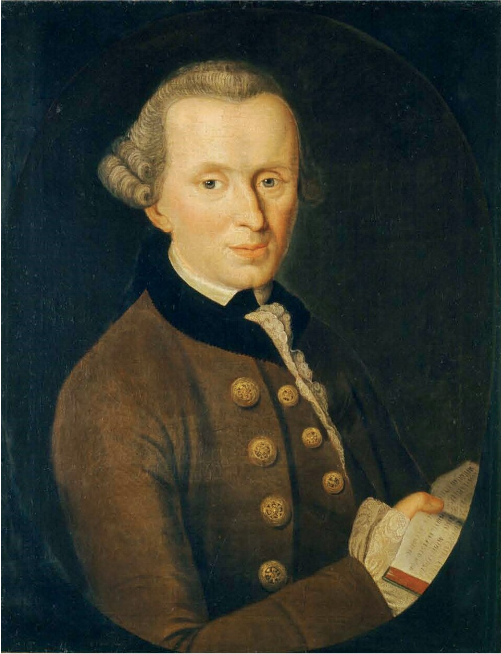
Kant
We believe that Kant provides a good starting point for understanding the debate over the nature of Mathematics, not only from the perspective of logicism but also from that of the other schools that emerged around this debate. In one way or another, the different movements that arose in its wake refer back to Kantian notions.
For the Prussian philosopher, our faculty of sensibility provides us with “intuitions” (Anschauungen) or immediate representations, the point of contact between our intellect and objects. Such intuitions are indivisible unities and do not by themselves constitute our thought. Thoughts as such arise from “concepts” (Begriffe), which allow us to mediate between intuitions by means of some property they share. Intuitions therefore supply the material content of our thoughts, while concepts allow us to manipulate them intellectually.
Kant’s innovative position, which breaks with the empiricism–rationalism duality of earlier authors, is his defence of the claim that sensory experience immediately structures our apprehension of the world. Knowledge does not simply proceed from objects as they are given to us. For something to appear to us as an object of experience, it must already do so under certain prior conditions of our sensibility. These conditions are space and time: not features extracted from things, but pure forms through which we immediately organise everything presented to us.
Analytic judgments
Concepts require intuitions grounded in sensory experience in order to give shape to thoughts. Kant nevertheless argues that it is possible to make judgments about concepts per se. These are the judgments Kant called analytic or tautological: self-evident statements already contained in the concept itself. Kant gives the proposition “bodies have volume” as an example. The property “having volume” is precisely part of what defines bodies, and the judgment therefore does not extend the original concept.
Although analytic judgments are necessary truths, they do not extend our knowledge, since they permit no assertion beyond what is already known. For Kant, every analytic statement, because it lacks intuitive material, is immediately evident and trivial. Kant therefore excludes every mathematical proposition from the class of analytic judgments: the predicate “having angles whose sum is 180º” is not contained in the concept of a “triangle”.
— The concept of “twelve” is by no means already thought merely by thinking the union of “seven” and “five”; I could analyse such a concept for as long as I pleased and would still never find “twelve” in it. —
Immanuel Kant. Critique of Pure Reason. 1787.
Mathematics and synthetic judgments
For Kant, mathematics occupies a distinctive position within knowledge. Its propositions do not arise from empirical experience: we need not count particular physical objects to know that seven plus five equals twelve, nor measure every possible triangle to recognise that its angles sum to two right angles. In this sense, mathematical truths are a priori: they possess necessity and universality, and their validity does not depend on observing the world.
This does not mean, however, that mathematics consists merely of analytic truths. Reaching the result requires more than analysing concepts; we must construct the operation, move through a sequence and add units. Arithmetic therefore requires a constructive activity. The key point is that this construction is not performed through empirical intuitions, but through pure intuitions. Geometry is grounded in the pure form of space: we can construct a line, triangle or figure before confirming it in experience, because space is the form under which any external object can appear to us. Arithmetic, for its part, is linked to time as the form of succession: counting involves adding one unit after another, ordering the elements into a series and proceeding through that series successively. Mathematics therefore consists, for Kant, of synthetic a priori judgments: synthetic because they extend knowledge, and a priori because this extension does not depend on empirical experience, but on the pure forms that make all experience possible.
Logicism and analytic judgments
As we will see in this article, logicism explicitly seeks to contradict Kant by arguing that every mathematical proposition is a necessary or analytic truth. Other approaches to the foundational debate, such as constructivism and intuitionism—which we will explore later in this series—by contrast revive certain Kantian themes, especially the centrality of construction and intuition, although they transform them profoundly
The New Logic
Syllogistic Logic
When Kant considers analytic judgments, he has Aristotle’s Syllogistic Logic in mind: deductions that follow necessarily from given premises and from no circumstantial consideration. This logic analyses propositions according to the subject–predicate scheme, for example, “all \(S\) are \(P\)”. Its strength lies in showing relations of inclusion and exclusion between concepts. Every syllogistic judgment can be reduced to one of the four categorical propositions that establish the possible forms of concept inclusion.
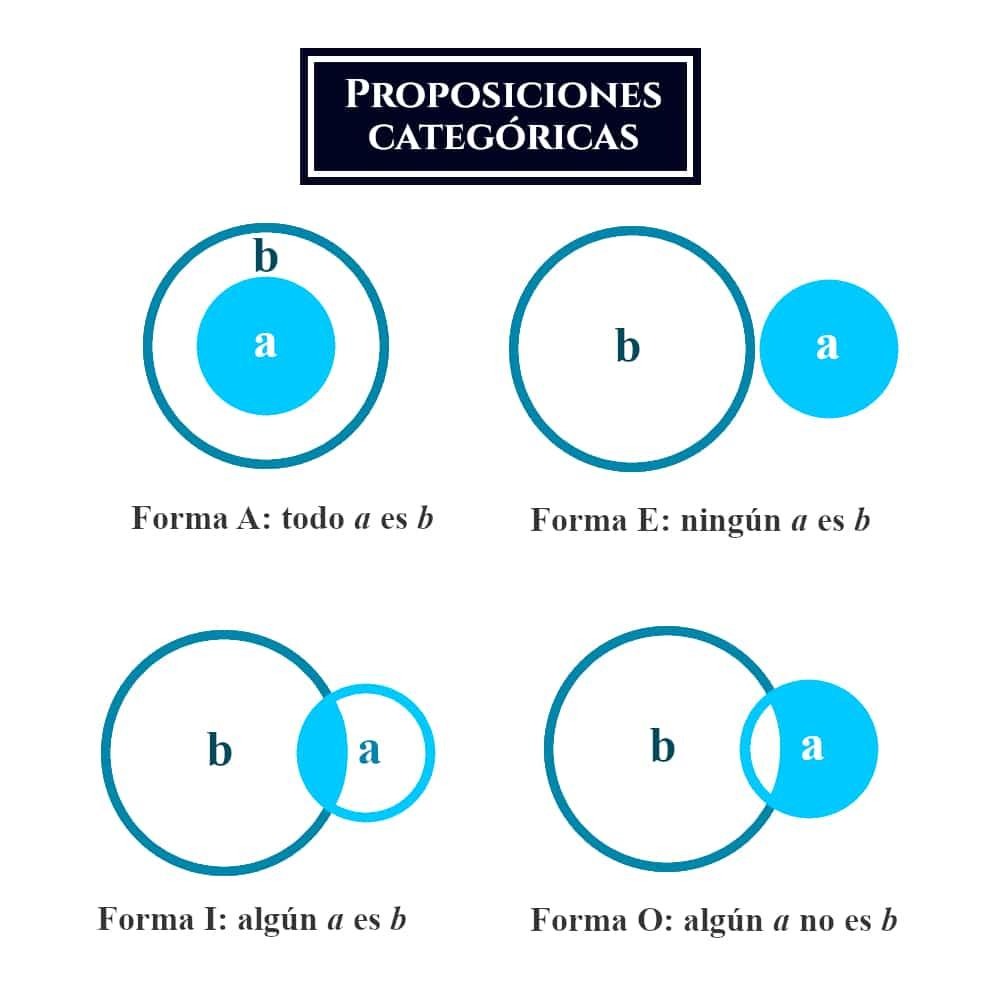
Thus, for example, the proposition “all Greeks are men” follows the scheme of form A, while “no man can fly” exemplifies form E. It follows from the premises that no individual falling under the concept ‘Greek’ also falls under the concept ‘can fly’.
Propositional Logic
For Kant, logic, as analytic and non-ampliative knowledge, is a sterile branch of knowledge. Formal logic does not by itself expand the content of knowledge. Throughout the nineteenth century, however, it would reveal many possibilities for development. Boole and Schröder laid the foundations of an algebra of logic: logical connectives such as conjunction \(∧\), disjunction \(∨\) and implication \(→\) operated on truth values (T and F, or alternatively \(1\) and \(0\)), making it possible to derive conclusions through mechanical calculation.
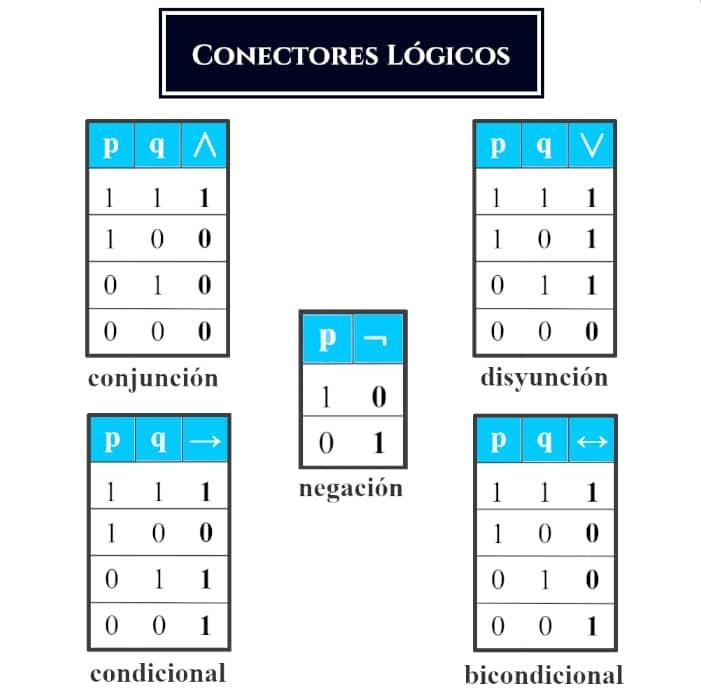
Today, this development has led to what is known as Propositional Logic. Unlike the Syllogism, it does not focus on concepts such as “man” or “Greek”, but on complete propositions treated as units that may be true or false. A proposition (\(P\)) can thus be combined with another (\(Q\)) by connectives such as “and”, “or”, “not” and “if… then”. This makes it possible to study the form of many valid inferences with great precision.
Logicism
By the mid-nineteenth century, formal logic had not yet developed a syntax rich enough to express complex mathematical statements. Many mathematical propositions cannot easily be reduced to a relation between subject and predicate, object and property, but instead express relations among several objects: “\(a\) is greater than \(b\)”, “\(x\) divides \(y\)”, or “\(z\) lies between \(x\) and \(y\)”. This made Syllogistic Logic insufficiently flexible to represent such multiple relations. Propositional Logic also has a fundamental limitation: it does not analyse the internal structure of propositions. Statements as different as “Socrates is mortal”, “every prime number greater than two is odd” and “there exists a number greater than every other number” may all be reduced to simple letters—\(P\), \(Q\) or \(R\). It is therefore insufficient for expressing the quantified and relational structure of mathematics.
In parallel with these developments, Arithmetic and Analysis were seeking increasingly rigorous formulations. Consider the definition of a limit proposed by Weierstrass in the 1850s, a milestone of modern Analysis that remains in use today. The limit of a function \(f(x)\) as \(x\) approaches \(p\) is \(L\)…
…if for every \(\varepsilon >0 \) there exists a \(\delta >0 \) such that, for every \( x \), if \(\left| x\, – \, p \right| < \delta \) then \(\left| f(x)\, – \, L \right| < \varepsilon \).
The italicised terms “if… then” and “there exists a” are expressions associated with Propositional or Syllogistic Logic, unlike expressions specific to arithmetic such as “less than” and “greater than”. Resources of this kind are common to every branch of mathematics and even to any science aspiring to rigour. Does logic not encompass the rules of inference common to every field of knowledge, including mathematics? This is precisely the fundamental claim of logicism: mathematics is a branch subordinate to logic, and every mathematical proposition can be deduced from the laws of truth and inference.
Gottlob Frege’s Logicism
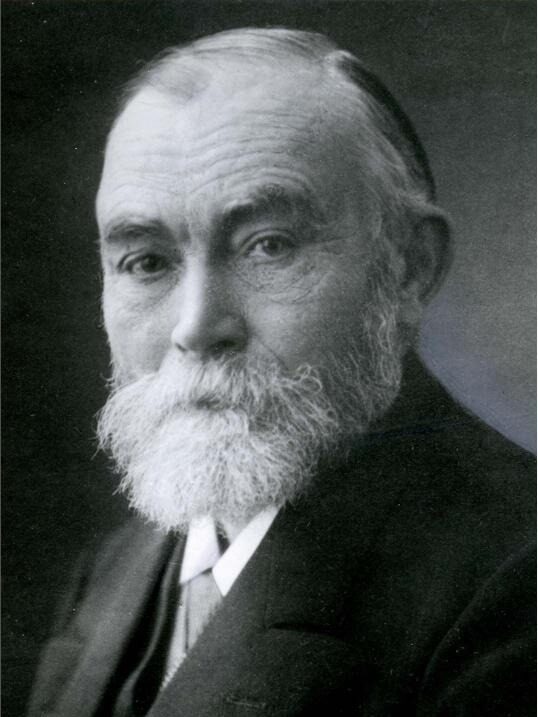
Gottlob Frege was already a mature mathematician when he embarked on his project to establish the philosophical foundations of mathematics. Although his project went virtually unnoticed for decades, it ultimately became the first systematic programme of logicism. In 1879, Frege laid the foundations of the principles governing Logic as it is understood today in his work Begriffsschrift (roughly translatable as Concept Script). Today we know this branch of logic as Predicate Logic (or First-Order Logic), and Frege would use it as the foundation of mathematical notions.
Arithmetic and sensibility
Frege distinguishes between an idea or subjective psychological evocation, and the objective proposition whose truth does not depend on the physical or mental conditions under which it is expressed. The distinction is comparable to that between a “memory” and an “event”. An arithmetic proposition such as 2+2=4 is surrounded by an aura of certainty and conviction so strong that its negation cannot even be coherently conceived. The applicability of Arithmetic to the physical world should not distract us from its universal character, independent of every circumstance.
– The foundations of arithmetic are deeper than those of any empirical science, even geometry. The truths of arithmetic govern everything that can be numbered. This is the broadest domain of all, encompassing not only what is real or intuitable, but everything that is even thinkable. Should not the laws of number, then, be intimately connected with the laws of thought? –
Gottlob Frege. The Foundations of Arithmetic. 1884.
By denying that mathematical certainty depends on sensible intuitions, Frege openly opposes Kant. For Kant, judgments, whether true or false, result from the synthesis of concepts with sensible material in the form of intuitions. Frege argues in precisely the opposite direction: our capacity for analysis allows us to abstract the concepts underlying the judgments we make. These concepts per se are the object of study of logic. Curiously, Frege agrees with Kant that geometry is indeed a synthetic discipline grounded in our intuition of space.
The Logical Language
Frege’s ambition to derive the elementary principles of Arithmetic from Logic was impossible given the expressive limitations already discussed. A new logic was required: a kind of language that would replace the ambiguities of ordinary language with a precise inferential structure. In Frege’s words in the Begriffsschrift, a formal language capable of expressing “those relations that are independent of the specific properties of things”. Its purpose would be to encode the forms of inference required to reconstruct mathematical proofs rigorously, as in the earlier example concerning the definition of a limit. The result would make it possible to build long chains of inference, deduction after deduction, with strict rigour.
Function and argument
The syllogism is the logic of the inclusion and exclusion of concepts, while Propositional Logic concerns the calculation of truth values by means of logical operators (conjunction, disjunction, and so on). Frege seeks to combine both within a single system.
The innovation Frege introduces in the Begriffsschrift consists in abandoning the traditional subject–predicate scheme of Syllogistic Logic and replacing it with an analysis in terms of function and argument. Rather than attending to the superficial grammatical form of a sentence, Frege examines its logical structure: a function is an incomplete expression, such as “\(x\) can fly” or “\(x\) defeated \(y\)”, and operates as an open structure that produces a complete judgment only when its variables are replaced by particular objects or arguments. This distinction is motivated by the aims of the work: Frege holds that two judgments have the same conceptual content when the consequences derivable from them are the same. It is therefore inappropriate to distinguish logically between statements such as “the Greeks defeated the Persians at Plataea” and “the Persians were defeated by the Greeks at Plataea”. Their grammatical subjects differ, but their meaningful content—and consequently their logical implications—is the same.
Variables and quantification
Unsaturated expressions such as “\( x \) can fly” do not constitute closed propositions capable of being true or false, because they contain a variable with an undetermined value. The use of these variables gives Frege’s logic far greater expressive power than Propositional Logic. This new logic has two principal features:
– First, Frege’s logic is polyadic logic. A predicate may contain multiple variables. For example, “\( a \) is the murderer of \( b \)”. This feature does not fit comfortably within traditional syllogistic logic, which centres on monadic predicates.
– Second, it is a quantified logic. Saying “the number twenty has a successor” is not the same as saying “every integer has a successor”. The two expressions share the same predicate, but the second, unlike the first, refers to an entire domain. It therefore quantifies over the domain of possible values of the variable—in this example, the integers. In modern notation, the quantifiers are \(\forall\) (“for every”) and \( \exists\) (“there exists”).
Conclusion
Let us return to Weierstrass’s definition of a limit, now expressed using Frege’s logical language (with modern notation rather than Frege’s own, which is complex and never spread beyond his writings):
$$\forall \varepsilon \left[
\varepsilon > 0 \to
\exists \sigma \left[
(\sigma > 0) \wedge
\forall x \left[
\left(0 < \left|x-p\right| \wedge \left|x-p\right| < \sigma\right)
\to
\left|f(x)-L\right| < \varepsilon
\right]
\right]
\right]$$
In the next article, we will see how Frege deployed the full expressive power of this logical language—now known as Quantificational or First-Order Logic—to provide a logical definition of number from which the remaining theorems of arithmetic could be deduced. With this new arithmetic, Frege established the principles of logicism, which would later be continued by authors such as Russell and Ramsey.
Recommended Reading
– Kant, I. (1787) Critique of Pure Reason.
– Frege, G. (1879) Concept Script.
– Frege, G. (1884) The Foundations of Arithmetic.